
An Open Letter of Hope and Guidance to the New Chief Commissioner of the MACC

To: YBhg Datuk Seri Abdul Halim Aman,
Chief Commissioner, Malaysian Anti-Corruption Commission
Assalamualaikum warahmatullahi wabarakatuh and salam sejahtera.
Allow me first to extend my sincere congratulations on your appointment as Chief Commissioner of the Malaysian Anti-Corruption Commission.
It is not a small office you now occupy. It is not merely another chair in Putrajaya, another title in the machinery of government, or another name added to the long procession of public appointments. It is a post that carries the anxieties of a nation, the expectations of the rakyat, and the heavy moral burden of an institution that must stand where many others hesitate.
I write this not only to wish you well, but to offer a few reflections from one senior law enforcement officer to another.
I served in an earlier time, when the Anti-Corruption Agency was still known simply as the 'ACA'. It was a different era, with different tools, different pressures, and perhaps even a different public temperament. The country was still finding its way through the hard work of development. Institutions were being shaped. Public service still carried, at least in aspiration, a certain quiet dignity.
The ACA was never perfect. No enforcement agency ever is. But it carried a serious promise: that corruption was not merely a legal offence, but a national disease. It was understood, even then, that when corruption enters the bloodstream of government, it does not only steal money. It steals confidence. It steals fairness. It steals the future from those who obey the rules.
Over the years, the ACA became the MACC. With that transformation came a larger mandate, stronger powers, greater visibility, and far greater expectations. The Commission was meant to be more than a rebranded agency. It was meant to be a herald of a more mature Malaysia; a nation prepared to confront abuse of power not selectively, not theatrically, and not conveniently, but with institutional courage.
That is the hope the rakyat still carries.
But hope, Datuk Seri, is a demanding thing. It does not survive on press statements. It is not sustained by slogans, statistics, or ceremonial declarations of reform. Hope survives only when ordinary citizens can see that the powerful are not beyond scrutiny, that investigations are not guided by political weather, and that enforcement is not a weapon for some and a shield for others.
This is the thin line you now walk.
The MACC today stands at a difficult moment in its own history. It is powerful, but power alone does not earn trust. It is visible, but visibility is not the same as credibility. It is feared, perhaps, but fear is a poor substitute for respect.
“Power tends to corrupt, and absolute power corrupts absolutely.” – Lord Acton.
That warning was not written only for politicians. It applies equally to institutions that investigate politicians. It applies to every officer who holds discretion over another person’s liberty, reputation, business, career, or future. The danger of anti-corruption work is that those entrusted to fight corruption may one day forget that they too must be guarded against arrogance, complacency, and institutional self-preservation.
That is why your first few months in office will matter deeply.
The rakyat will watch not merely what you say, but what you do first. They will watch whom you protect, whom you discipline, which files move, which files sleep, which investigations are pursued with vigour, and which are allowed to drown quietly in administrative silence. They will watch whether reform begins at the front door or whether, as too often happens, the new broom is displayed proudly before being stored neatly in the cupboard.
Forgive the plainness. At my age, one learns that public service has little use for decorative language when the house is on fire.
The MACC must now show that it is prepared to govern itself before it presumes to cleanse others. Internal discipline must not be symbolic. Integrity vetting must not be polite paperwork. Complaints against officers must not be treated as betrayal. Whistleblowers must not be punished by process. And the public must never be asked to trust blindly what the institution itself is unwilling to make transparent.
This is not an argument for weakening the MACC. Quite the opposite.
Malaysia needs a strong MACC. But strength without accountability becomes intimidation. Independence without transparency becomes suspicion. Enforcement without moral consistency becomes theatre. And theatre, however dramatic, does not build a nation.
The Commission must be feared by the corrupt, yes. But it must also be trusted by the innocent. That balance is the true measure of an enforcement institution.
You come into this office with a judicial background. That is significant. A judge is trained to listen before deciding, to weigh evidence before acting, and to understand that justice is not merely the result, but also the manner in which the result is reached. That temperament may now be one of your greatest assets.
The MACC does not need more noise. It needs steadiness.
It needs leadership that understands the difference between pressure and principle. It needs officers who are protected when they act with integrity, and removed when they abuse authority. It needs systems that do not depend on the virtue of one man alone. Because no agency should be built around personalities. Institutions endure only when values are converted into procedures, and procedures are enforced even when inconvenient.
This is where international best practice offers a useful mirror. Agencies such as the FBI, Interpol-linked enforcement networks, and mature anti-corruption bodies elsewhere understand that credibility is built through disciplined case management, evidence integrity, internal oversight, independent review, protected reporting channels, and professional detachment from political interests. They are not perfect either. But their strength lies in recognising that public confidence is not ornamental. It is operational capital.
Without public confidence, witnesses hesitate. Whistleblowers stay silent. Honest officers lose heart. Criminal networks adapt. And the rakyat, tired of promises, begin to believe that corruption is not an offence but a way of life.
That would be the most dangerous defeat of all.
Datuk Seri, you will need courage. Not the loud kind that seeks applause, but the quiet kind that disappoints powerful people when disappointment is necessary. You will need patience, because rebuilding trust is slower than destroying it. You will need humility, because the MACC cannot demand integrity from others while appearing allergic to scrutiny itself.
Most of all, you will need allies of conscience.
There are still many Malaysians who want the MACC to succeed. Retired officers. Serving officers. Lawyers. Judges. Civil servants. Business leaders. Journalists. Citizens. People who may criticise the institution sharply, but only because they still believe it matters. They are not your enemies. In many cases, they are the last people still willing to tell the truth before silence becomes national policy.
Listen to them.
The rakyat does not expect miracles. Malaysians are wiser than that, despite what some public relations departments seem to believe. What they expect is seriousness. They expect fairness. They expect consistency. They expect the new Chief Commissioner to understand that the office is not inherited privilege, but temporary stewardship.
One day, as with all of us, you will leave the chair. When that day comes, the question will not be how many statements were issued, how many raids were photographed, or how many statistics were announced.
The question will be simpler, and far more unforgiving:
Did the MACC become more trusted under your watch?
Did honest officers feel protected?
Did the corrupt feel less comfortable?
Did the rakyat feel that justice had moved even one inch closer to them?
If the answer is yes, then your tenure will have served the nation well.
I wish you strength, wisdom, and moral clarity in the work ahead. May you lead not only with authority, but with conscience. May you remember that corruption is not defeated by power alone, but by disciplined integrity applied without fear or favour.
And may the MACC, under your stewardship, become once again not merely an agency that investigates corruption, but an institution that helps restore faith in Malaysia itself.
With sincere respect and hope,
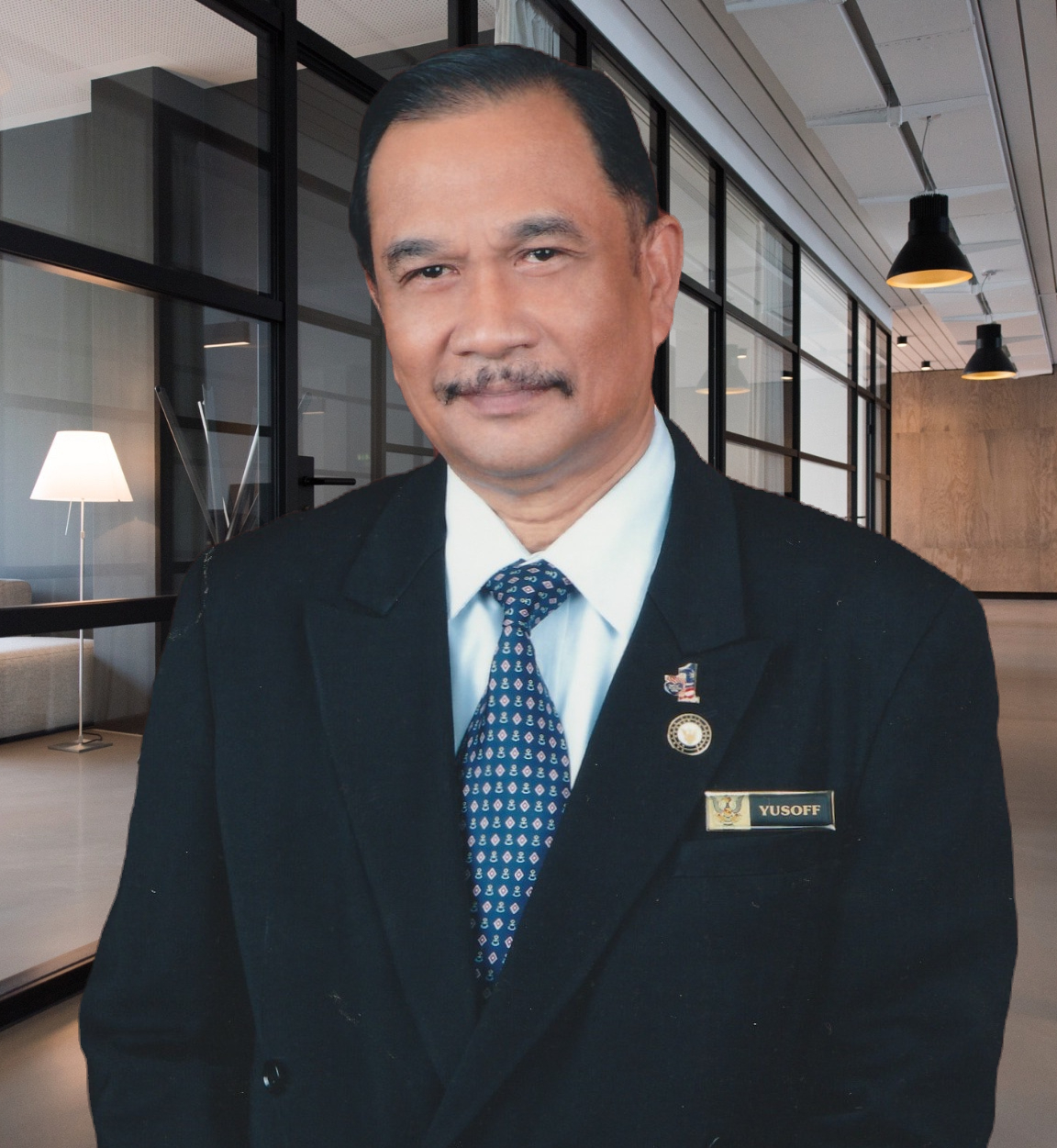
Datuk Dr Hj Yusoff Nook


Comments